
Built-up Felt Roofing
Multi-layer torch-on felt systems built to take the weather.
About built-up felt roofingTraditional leadwork, flashings and detailing done right.
Lead roofing is the oldest weatherproofing trade there is, and still the best material for the jobs it does. Flashings, valleys, soakers, chimney details and the small roofs over bays, dormers and porches all rely on lead, because nothing else moves with a building and seals against brickwork the way lead does. Abbotts Flat Roofing carries out traditional leadwork across Staffordshire, with over 15 years in the trade.
It is also where most roofs let water in. Failed leadwork causes a huge share of the leaks we get called to, usually a flashing that has split, worked loose or been pointed over with mortar instead of dressed properly. Whether you need new leadwork, lead flashing repair on an older property or replacement after theft, we do it in the correct code, dressed and secured to last.
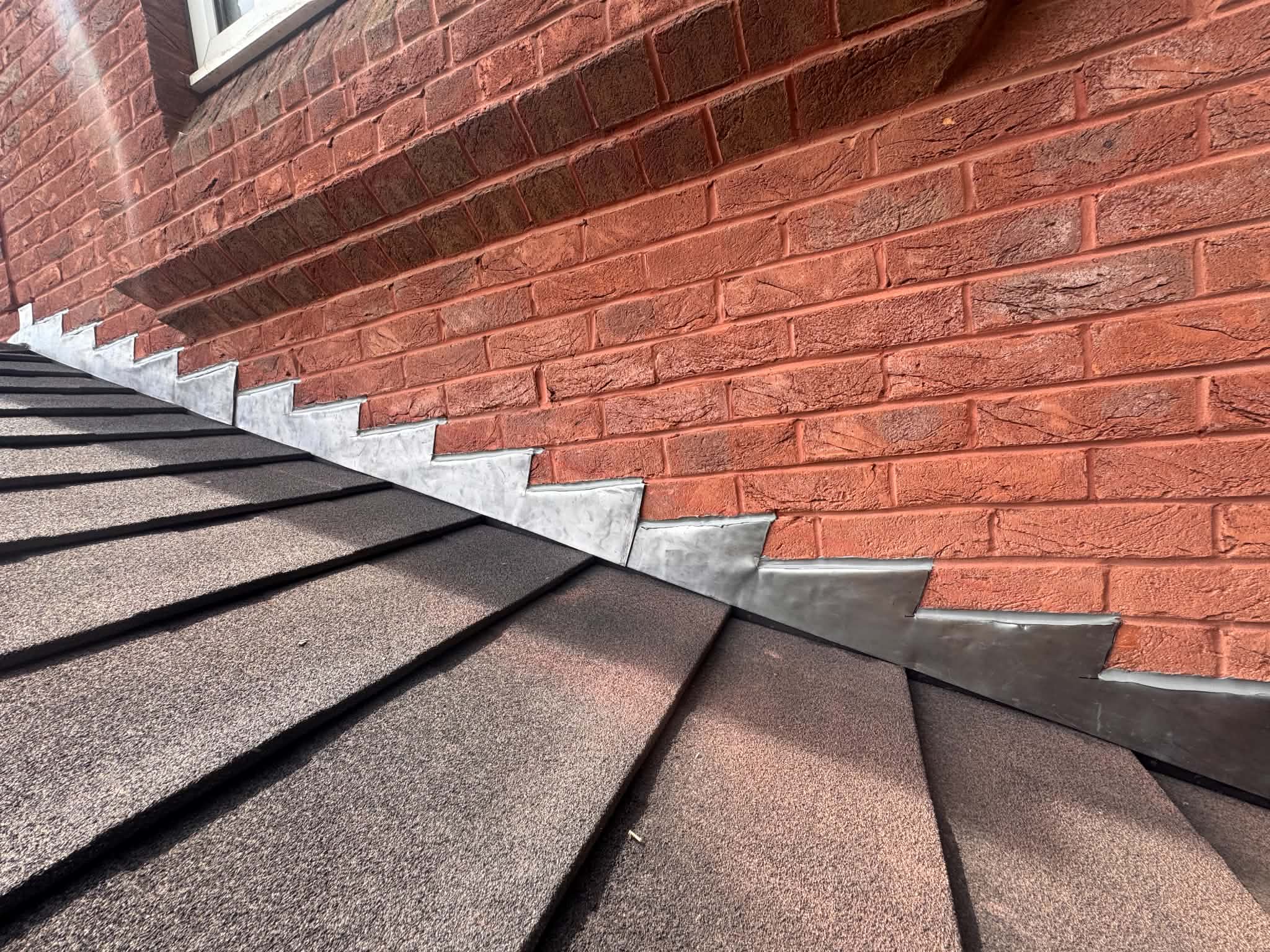
Most leadwork is not a whole roof. It is the detailing that makes the rest of the roof work: step flashings where a roof meets a wall, valleys where two slopes drain into each other, soakers under the tiles, and the aprons and back gutters around chimneys. Then there are the small roofs where lead is the covering itself, over bays, dormers and porches, where its long life and neat finish suit the job better than any membrane.
We handle leadwork on homes and commercial buildings alike. On houses that means chimney details, porch and dormer coverings and flashings around extensions. On shops, offices, schools and industrial units it is usually parapet details, valleys and abutments where roofs meet walls. We are based in Staffordshire and cover Cheshire and Derbyshire too, and because we install six roofing systems, the leadwork always ties in properly with the main roof covering.
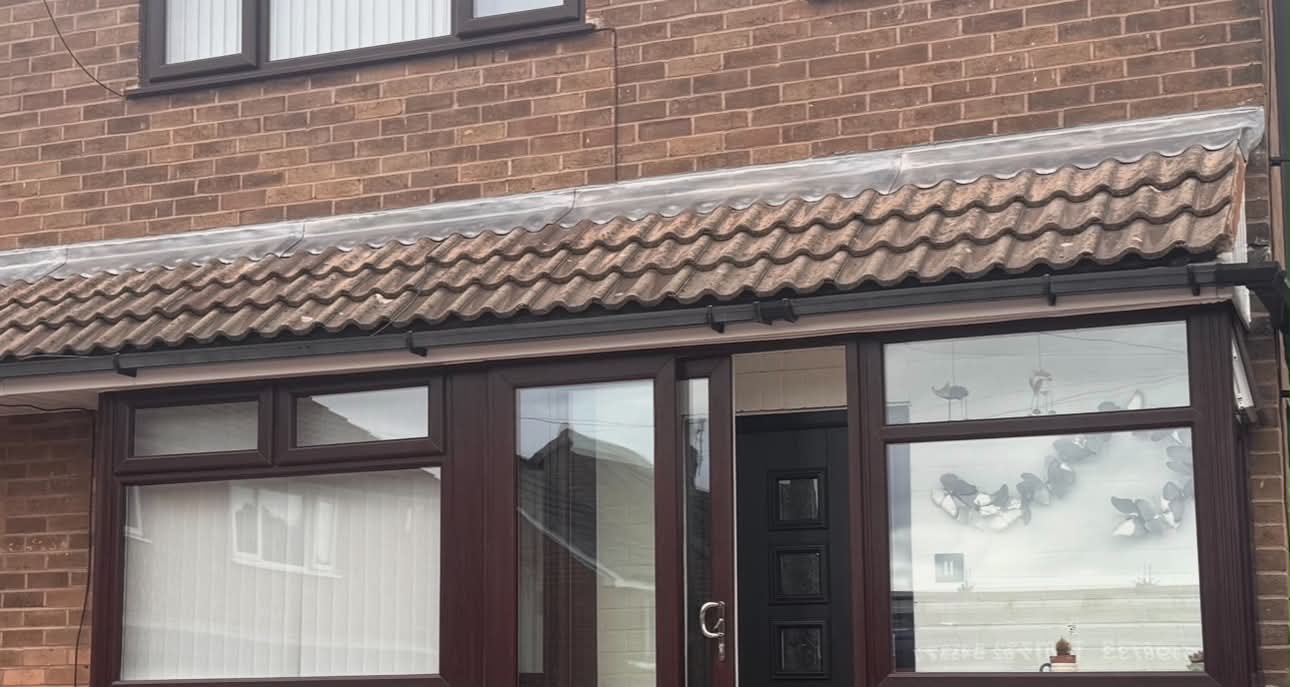
Lead comes in codes, which is just the thickness. Code 3 is thin material for soakers, code 4 suits most lead flashing, and heavier codes go on valleys and coverings that take more movement and foot traffic. The right code matters because lead expands and contracts with temperature: too thin in the wrong place and it fatigues and splits, too long in one piece and the same happens. Proper leadwork is sized in short lengths with correct laps for exactly that reason.
On site, a step flashing starts with a clean chase cut into the mortar joints, then each step is cut, dressed into the brickwork, wedged and pointed so it sheds water onto the tiles below. Recent Abbotts jobs show the standard: stepped flashing dressed neatly into brickwork where roof meets wall, and new leadwork crowning a tiled porch. No sealant smeared along a joint and called a repair. Fixed properly, the traditional way.
The usual signs of failed leadwork are damp patches on chimney breasts, stains in the top corners of rooms, and drips that only appear in driven rain. Look for flashings pulled out of the wall, splits across the face of the lead, or crumbling mortar fillets where a flashing should be. A lead roof repair is often straightforward if caught early: refixing a loose flashing, welding a split, or replacing one short length rather than the lot.
Lead theft is still a problem, and we handle theft replacement as well as repairs to stripped or split lead on homes and commercial buildings across Staffordshire. The value case is simple: installed in the right code with correct laps and fixings, leadwork outlasts every other covering we fit, often by decades. It costs more up front than a mortar fillet or a stick-on strip, and it is the last time you pay for that detail.
Cannot see what you are after? Give us a call and we will talk it through, no pressure.
It depends on the code of lead needed, how much of it, and access. A short flashing repair sits at the affordable end; chimney details needing scaffold, or a full porch covering, cost more. Lead is priced by weight, so heavier codes cost more per metre. Every job gets a free, no obligation written quote, so you know the figure before we start.
Usually, yes. A flashing that has worked loose can be refixed, re-wedged and repointed, and a clean split can often be lead welded. We only recommend replacement when the lead is too thin, fatigued or the wrong code in the first place, because a repair on lead like that will not hold. We will tell you which it is, in writing, when we quote.
Longer than most roofs around it. Properly specified and fixed leadwork routinely lasts 60 years and more, and lead on older buildings is often still working after a century. The failures we see are almost always the wrong code, pieces cut too long or poor fixing, not the material itself. That is why installation standards matter more with lead than anything else.
Get it covered quickly, because an exposed abutment or valley lets water straight into the building. Call us on 07479 664747 and we will make it watertight, then quote for proper replacement. We regularly replace stripped lead on homes and commercial buildings, and where theft is likely again we will talk through the options first. The quote is free, written and no obligation.
Tell us about your roof and we will give you honest advice and a free written quote, anywhere across Staffordshire, Cheshire and Derbyshire.